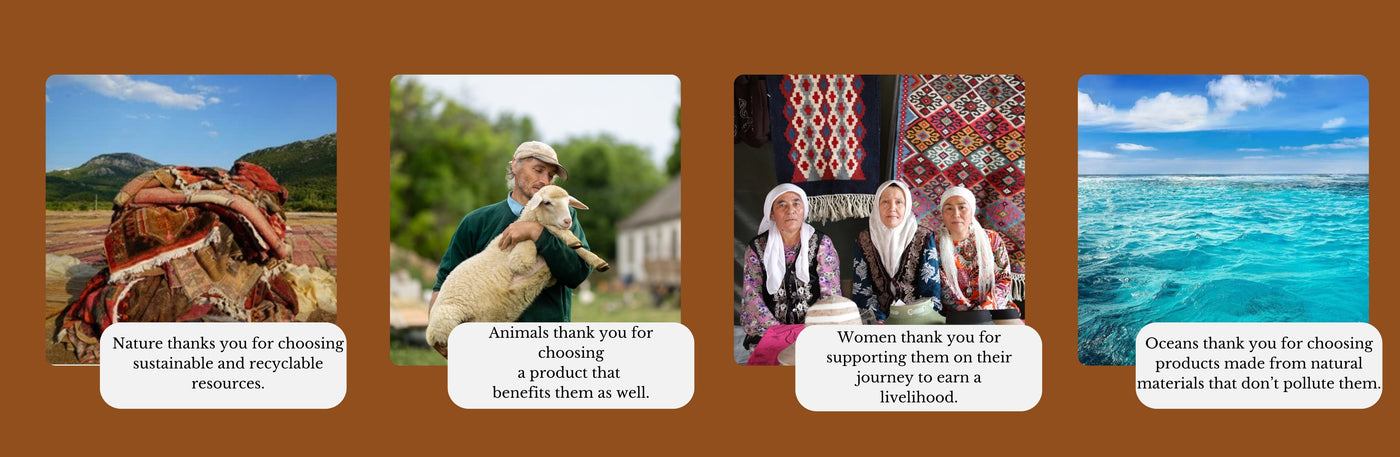
Thank You
Sustainable processes are beneficial and necessary not only for the environment but for the entire ecosystem.
When producing a hand-woven rug, the tools used are sourced from nature, the yarns are obtained from animals, and the craftsmanship comes from experienced women. Hand-woven rug production doesn't pollute the seas, you don't burn fossil fuels for processing, or use chemicals for dyeing. Nature, animals, our artisans, and the ecosystem thank you for this eco-friendly choice.
-

Natural Resources
When carpets are made, the wool is spun directly from the sheep into yarn.
This process produces a pure product from nature, far removed from the fumes of factories. The quality of hand-woven carpets is not only related to the skill of experienced hands; it is also related to this pure, natural craftsmanship.
-

Processing Nature
When a hand-woven carpet takes shape, it's not just natural raw materials that play a role.
This material is shaped by human hands, but the tools used in this process also come from nature. Wooden rugs, weaving looms, spinning wheels, and all other materials used in the process are sourced from nature.
-

Functionality
Carpets are not ordinary decorative items produced for trivial purposes.
Just as it is important for a product to be made from natural resources, it is equally important that it serves a purpose. Designed for insulation, shelter, and protection from external elements, carpets still play a functional role today. By serving a purpose, they contribute to the efficient use of natural resources and support recycling.
-

Women Power
The art of carpet weaving, representing a tradition spanning thousands of years, has flourished on the shoulders of women.
Even in the last century, this skill, passed down from mothers to children, formed the foundation for the industry's survival. Women, who manage life cycles, have immortalized themselves by passing on their skills and experience through generations. Once again, the power of women continues to sustain and preserve this culture.